

Arch pain — more than just "needing arch support"

Arch pain is a symptom — not a diagnosis. It can be caused by plantar fasciitis, posterior tibial tendon dysfunction, midfoot arthritis, or simple overload from excessive pronation. The treatment depends on addressing the forces, not just propping up the arch.

🎓 8 independent university studies

🔬 All Interpod devices significantly raise navicular height (p<0.0001)

Does this sound like you?

Recognise any of these symptoms?

  • Aching or burning along the inside arch of the foot

  • Pain that's worse after walking, standing, or exercise

  • Arch collapses visibly when standing compared to sitting

  • Pain that improves with rest but returns with activity

  • Stiffness in the arch first thing in the morning

  • Tried generic arch supports but they didn't help enough
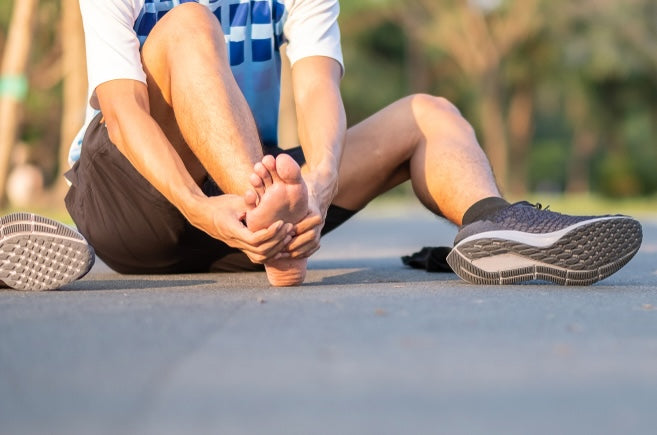
Arch pain is one of the most common reasons people search for insoles. But simply adding arch height doesn't address the underlying forces — which is why generic insoles often disappoint.

Person sitting on a road with one foot elevated, possibly experiencing arch pain.

Understanding Your Pain

What's causing your arch pain?

The medial arch is maintained by a combination of bone structure, ligaments (particularly the spring ligament and plantar fascia), and the posterior tibial tendon. When pronation forces are excessive, these structures are overloaded — the arch flattens beyond its capacity, and the supporting tissues become strained.

Common causes of arch pain:

Plantar fasciitis — the plantar fascia runs the length of the arch. When overstretched by pronation, it becomes inflamed and painful, often concentrated at the arch and heel.

Posterior tibial tendon overload — this tendon is the primary dynamic arch support. Excessive pronation forces it to work harder, causing inflammation and pain along the inner arch and ankle.

Midfoot joint strain — the joints of the midfoot can become stressed by repetitive pronation loading, producing a diffuse ache across the arch.

Why "more arch support" isn't always the answer

Generic arch supports simply push the arch up from below. Without a rearfoot wedge to resist the pronation forces, the foot rolls over the top of the insole — the arch flattens regardless. Effective arch pain treatment requires controlling the forces that flatten the arch, not just propping it up.

Your Treatment Plan

Your path to healing — step by step

Jump in at the stage that matches where you are right now.

1

Right now — Reduce the strain

Immediate relief

  • Ice the arch - roll a frozen water bottle under the arch for 15–20 minutes, 3–4 times daily.

  • Massage ball - roll a tennis ball under the arch to release tension in the plantar fascia and intrinsic muscles.

  • Stretch calves and plantar fascia - tight calves force compensatory pronation. Stretch daily, 30 seconds each side.

  • Supportive shoes - wear structured footwear with arch support and a firm heel counter. Avoid going barefoot on hard floors.

  • Avoid flat shoes and thongs - these offer zero arch support and increase pronation loading.

2

Why generic arch supports fail

The limitation of off-the-shelf insoles

If you've tried pharmacy arch supports and they haven't resolved your pain, it's because they only provide one feature: arch height. They lack the biomechanical design features needed to actually control pronation forces.
  • Strengthen intrinsic foot muscles - toe curls, towel scrunches, toe yoga, single-leg balance. These muscles provide dynamic arch support from within.

  • Progressive heel raises - strengthen the posterior tibial tendon and calf complex. 3 sets of 12, every other day.

  • See a physiotherapist or podiatrist - if pain persists beyond 2 weeks, professional assessment can identify the specific cause (plantar fasciitis, posterior tibial dysfunction, or joint strain).

3

The solution — Biomechanical correction

Address the forces, not just the arch height

The Model P doesn't just support the arch — it controls the pronation forces that flatten it. Four biomechanical design features work together throughout the gait cycle.
  • Rearfoot Wedge - inverts the calcaneus and resists the pronation forces that collapse the arch. This is the missing feature in generic arch supports.

  • Plantar Fascial Groove - reduces windlass mechanism resistance, allowing the foot to raise its own arch more efficiently during push-off.

  • 1st Cutaway - enables natural first ray function, improving the foot's own stabilisation during gait.

Interpod raised navicular height significantly at all arch heights (p<0.0001). But unlike generic arch supports, it does this by controlling the forces — not just pushing the arch up from below. That's why it works when others don't.

4

Ongoing — Stay pain-free

Maintain and prevent recurrence

  • Wear the Model P daily - the forces that cause arch pain are present with every step.

  • Continue foot strengthening - intrinsic exercises 2–3 times per week.

  • Maintain calf flexibility - daily stretching prevents compensatory pronation.

  • 5-year warranty - the Model P is built to last. Replace top covers as needed.

Why Interpod Works

Four design features that resist pronation and assist supination

Generic insoles only have arch support. Interpod has four biomechanical design features — the same features found in custom orthotics costing $500+.

  • Plantar Fascial Groove ★

    A groove engineered into the orthotic to accommodate the plantar fascia. Reduces the force needed to establish the windlass mechanism — the foot's natural arch-raising system. Directly reduces the strain that causes plantar fasciitis.

    Assits supination
  • Rearfoot Wedge ★

    Resists the excessive pronation forces that over-flatten the arch and overload the plantar fascia. By inverting the calcaneus, it reduces the strain transmitted to the fascia during loading.

    Resists pronation
  • 1st Cutaway

    Allows the first metatarsal to plantarflex naturally during push-off, enabling the windlass mechanism to function properly without interference from the orthotic.

    Assits supination
  • Cuboid Notch

    Assists supination during the transition from midstance to push-off, stabilising the lateral column. Typically only found in custom-made orthotics.

    Resists pronation

Common Questions

Arch Pain FAQs

Is arch pain the same as plantar fasciitis?

Not always. Plantar fasciitis is the most common cause of arch pain, but posterior tibial tendon dysfunction, midfoot joint strain, and other conditions can also produce arch pain. The treatment approach is similar — reduce pronation forces and support the arch biomechanically — but persistent arch pain should be assessed by a podiatrist to identify the specific cause.

Why didn't my pharmacy arch supports work?

Generic arch supports only have one feature: arch height. Without a rearfoot wedge to control pronation, the foot simply rolls over the insole. Interpod has four biomechanical design features that work together to control pronation and assist supination — addressing the forces that flatten the arch, not just propping it up from below.

Do I need high arch support for arch pain?

Not necessarily. The correct level of support depends on the pronation forces your foot generates, not the severity of your pain. Many people with arch pain do well with Low or Moderate support. The Modular System ($119) lets you trial all three levels to find what works for your individual foot.

What if the orthotics don't help?

You're covered by our 90-day full refund guarantee. If arch pain persists, we recommend seeing a podiatrist for diagnosis — some causes of arch pain require specific treatment beyond orthotics. Contact us at help@interpod-orthotics.com.

Related Conditions

Interpod also treats

Start your path to lasting relief today

Australians have discovered that the right support can make everyday movement easier. Find the Interpod orthotic that suits your needs.

Try risk-free — 90-day full refund guarantee.