

Morton's neuroma — relieve the nerve compression

Morton's neuroma is a thickening of the nerve between the 3rd and 4th metatarsal heads, causing burning pain, numbness, and the sensation of standing on a fold of sock. Reducing forefoot compression and correcting pronation can significantly reduce symptoms.

🎓 8 independent university studies

🏥 The NHS’s most-prescribed prefabricated orthotic

📅 27 years of podiatry-led design

Does this sound like you?

Recognise any of these symptoms?

  • Burning or sharp pain between the 3rd and 4th toes

  • Numbness or tingling radiating into the toes

  • Feeling like there's a pebble or fold of sock under the ball of your foot

  • Pain that's worse in tight shoes and improves when barefoot

  • Clicking sensation between the metatarsal heads

  • Symptoms that worsen with walking and improve with rest
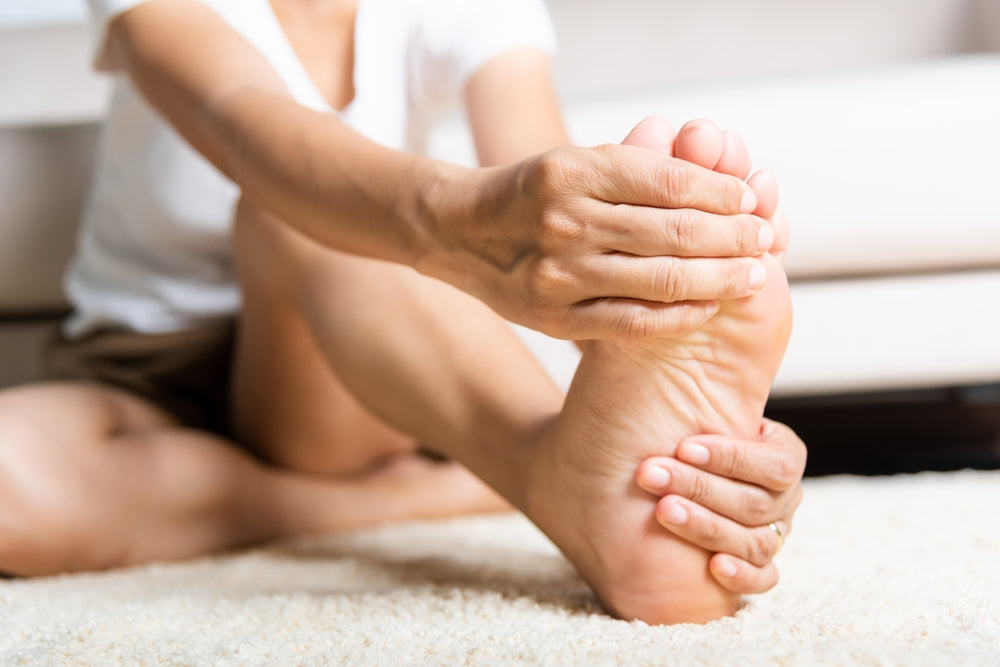
Morton's neuroma affects women significantly more than men — largely due to narrow, tight-fitting footwear that compresses the forefoot. But footwear alone doesn't explain the condition — biomechanical factors play a significant role.

A close-up lifestyle shot of a person sitting on a carpeted floor, holding and massaging their own foot.

Understanding Your Pain

What causes the nerve to thicken?

The interdigital nerve runs between the metatarsal heads in the forefoot. When the metatarsals are compressed together — by tight shoes, excessive forefoot loading, or biomechanical imbalance — the nerve is repeatedly irritated. Over time, the nerve thickens (fibrosis), forming a neuroma that becomes increasingly sensitive to pressure.

The pronation connection: Excessive pronation destabilises the forefoot, allowing hypermobility between the metatarsals. This creates abnormal shearing forces in the intermetatarsal spaces. Additionally, pronation shifts load medially, increasing compression on the central metatarsals where the neuroma typically develops.

Footwear is a major factor. Narrow toe boxes compress the metatarsal heads together, directly squeezing the nerve. High heels shift weight forward onto the forefoot, increasing the compression. But even in good shoes, biomechanical instability can perpetuate the condition.

Orthotics for Morton's neuroma

By controlling pronation and stabilising the forefoot, orthotics reduce the abnormal shearing forces between the metatarsals and allow the first ray to bear its proper share of load — reducing the compression on the affected interdigital nerve. This approach works best combined with appropriate footwear (wide toe box) and may be complemented by metatarsal padding.

Your Treatment Plan

Your path to healing — step by step

Jump in at the stage that matches where you are right now.

1

Right now — Reduce the compression

Immediate relief

  • Wide toe box shoes immediately - this is the single most important short-term intervention. The metatarsals need room to spread.

  • Metatarsal pad - placed just behind the metatarsal heads to spread the metatarsals apart and reduce nerve compression.

  • Ice between the metatarsal heads - 10–15 minutes after aggravating activity.

  • Stop wearing narrow shoes and high heels - these directly compress the nerve and perpetuate the condition.

  • See a podiatrist - accurate diagnosis is important. Morton's neuroma can be confirmed with a Mulder's click test and ultrasound. Other conditions (metatarsalgia, stress fracture, capsulitis) can mimic the symptoms.

2

Weeks 2–6 — Conservative treatment

Reduce inflammation and nerve irritation

  • Continue wide shoes + metatarsal padding - consistency is essential for nerve recovery.

  • Anti-inflammatory medication - NSAIDs to reduce nerve inflammation. Consult your pharmacist.

  • Toe spreaders - worn inside shoes to maintain metatarsal spacing.

  • Cortisone injection - your podiatrist may recommend a corticosteroid injection around the nerve to reduce inflammation. Effective for many patients but may need repeating.

3

Long-term — Biomechanical correction

Address the forces that compress the nerve

Padding and footwear manage the immediate compression. The Model P addresses the pronation forces that destabilise the forefoot and create the shearing forces between the metatarsals.
  • Rearfoot Wedge - reduces pronation, stabilising the midfoot and forefoot and reducing the shearing forces between the metatarsal heads.

  • 1st Cutaway - allows the first ray to bear its share of forefoot load, reducing the compensatory overload on the central metatarsals where the neuroma sits.

Morton's neuroma sufferers are often desperate for relief.The combination of wide shoes, metatarsal padding, and biomechanical correction with orthotics gives many patients significant improvement without surgery. But it requires consistency — the nerve needs time to settle once the compression is reduced.

Why Interpod Works

Four design features that resist pronation and assist supination

Generic insoles only have arch support. Interpod has four biomechanical design features — the same features found in custom orthotics costing $500+.

  • Plantar Fascial Groove ★

    A groove engineered into the orthotic to accommodate the plantar fascia. Reduces the force needed to establish the windlass mechanism — the foot's natural arch-raising system. Directly reduces the strain that causes plantar fasciitis.

    Assits supination
  • Rearfoot Wedge ★

    Resists the excessive pronation forces that over-flatten the arch and overload the plantar fascia. By inverting the calcaneus, it reduces the strain transmitted to the fascia during loading.

    Resists pronation
  • 1st Cutaway

    Allows the first metatarsal to plantarflex naturally during push-off, enabling the windlass mechanism to function properly without interference from the orthotic.

    Assits supination
  • Cuboid Notch

    Assists supination during the transition from midstance to push-off, stabilising the lateral column. Typically only found in custom-made orthotics.

    Resists pronation

Common Questions

Morton's Neuroma FAQs

Can orthotics cure Morton's neuroma?

Orthotics can't reverse the nerve thickening that has already occurred. But by reducing the biomechanical forces that compress and irritate the nerve, they can significantly reduce symptoms and prevent further progression. Many patients achieve substantial relief with orthotics combined with appropriate footwear, without needing surgery.

Do I need surgery for Morton's neuroma?

Not necessarily. Conservative treatment (wide shoes, metatarsal padding, orthotics, and potentially cortisone injection) is successful for many patients. Surgery (neurectomy) is considered when conservative treatment fails after 3–6 months. Consult your podiatrist or orthopaedic surgeon for assessment of severity.

Will the Model P fit in my shoes if they need to be wide?

The Model P has a 9/10 shoe fit rating with a slim profile. The Low arch provides the thinnest option. For Morton's neuroma, the priority is a wide toe box — the orthotic fits under the midfoot and rearfoot where shoe volume is less constrained. Many patients find the Model P fits well in wide-fitting shoes and athletic footwear.

What if the orthotics don't help?

You're covered by our 90-day full refund guarantee. If symptoms persist, consult your podiatrist about additional interventions including cortisone injection, shockwave therapy, or surgical assessment. Contact us at help@interpod-orthotics.com.

Related Conditions

Interpod also treats

Start your path to lasting relief today

Australians have discovered that the right support can make everyday movement easier. Find the Interpod orthotic that suits your needs.

Try risk-free — 90-day full refund guarantee.