

High arches — different problem, same solution

High arches (pes cavus) create the opposite problem to flat feet — but the result is the same: excessive tissue stress and pain. A rigid, high-arched foot absorbs shock poorly and concentrates pressure on the heel and forefoot. Interpod provides the support and redistribution these feet need.

🎓 8 independent university studies

🔬 3 arch heights — including Low for high arches that need gentle support

Does this sound like you?

Recognise any of these symptoms?

  • Visible high arch that doesn't flatten much when standing

  • Pain under the heel, ball of the foot, or both

  • Shoes wear heavily on the outside edge

  • Recurrent ankle sprains or a feeling of ankle instability

  • Claw or hammer toes

  • Difficulty finding insoles that actually fit your arch shape
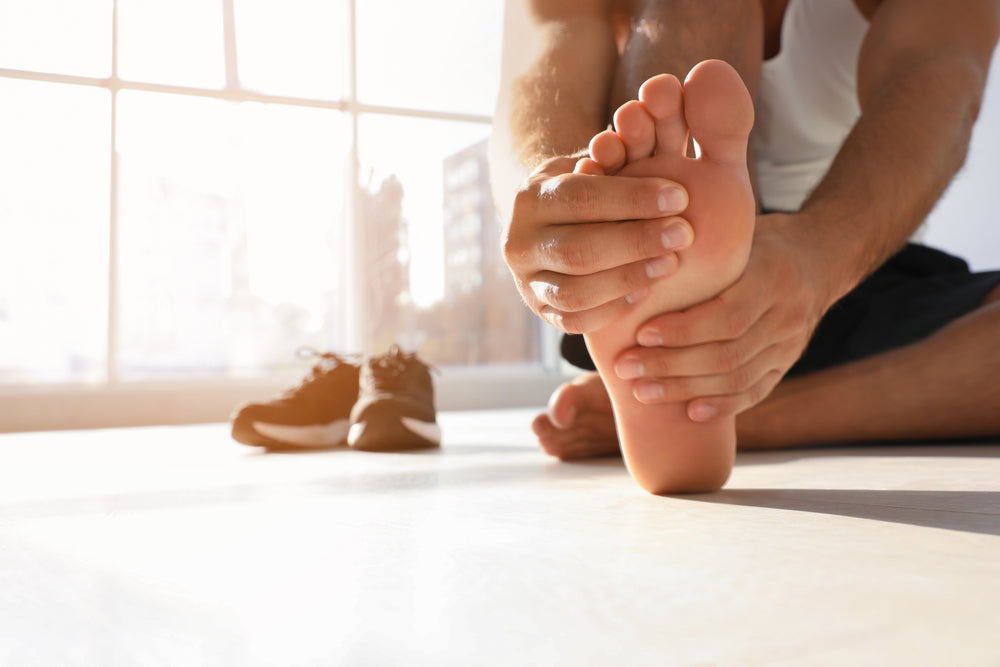
High arches affect about 10–15% of the population. Unlike flat feet, high arched feet are often rigid and poor at shock absorption — concentrating forces on a smaller contact area.

A close-up lifestyle shot of a person holding their foot, with a pair of brown athletic sneakers blurred in the background near a bright window.

Understanding Your Pain

Why high arches cause pain differently

A high-arched foot (pes cavus) is typically more rigid than a flat foot. It doesn't pronate enough — meaning it fails to absorb shock effectively during loading. The foot's contact area with the ground is smaller, concentrating pressure on the heel and the ball of the foot (metatarsal heads).

The consequences:

Heel pain — concentrated impact loading on the calcaneus without adequate shock absorption from midfoot collapse.

Metatarsalgia — excessive pressure under the metatarsal heads causes pain in the ball of the foot, especially during push-off.

Lateral ankle instability — a supinated foot position increases the risk of inversion ankle sprains.

Claw or hammer toes — the high arch pulls on the toe tendons, gradually deforming the toes.

Importantly, many people with high arches also have some degree of excessive pronation — the foot may appear high-arched but still pronate excessively during dynamic gait. This is why assessment should include both static posture and dynamic movement.

The right orthotic for high arches

High arched feet need an orthotic that fills the gap under the arch (to distribute pressure more evenly) while being flexible enough to accommodate the rigid foot shape. Interpod's Low arch is often the best starting point for high arches — it provides gentle support and improved pressure distribution without forcing the foot into an uncomfortable position.

Your Treatment Plan

Your path to healing — step by step

Jump in at the stage that matches where you are right now.

1

Understanding — What high arches need

Pressure redistribution, not just support

Unlike flat feet where the primary goal is resisting pronation, high arched feet primarily need better pressure distribution and improved shock absorption. The orthotic fills the gap under the arch so that ground reaction forces are spread across a larger area instead of concentrating on the heel and forefoot.
  • Low arch is often best for high arches - counter-intuitive, but a high-arched foot needs the most comfortable, least aggressive fit. Start with Low arch support.

  • Cushioning matters more here - high arched feet absorb shock poorly. The Model C ($65) provides additional cushioning alongside structural support.

  • Supportive shoes with cushioning - neutral running shoes with good midsole cushioning work well. Avoid motion control shoes (designed for flat feet).

  • Calf and foot stretching - high arched feet are often tight. Stretch calves, plantar fascia, and toe extensors daily.

2

The solution — Find your level

The Modular System for high arches

The Modular System is particularly valuable for high arches because the correct level of support is hard to predict without trying it. Some high arched feet prefer Low arch (gentle fill), others need Moderate (more contact), and a few benefit from High (maximum redistribution).
  • Start with Low arch - the most comfortable, least aggressive option. Fills the arch gap gently without forcing the foot.

  • Increase if needed - if Low doesn't provide enough support or pressure relief, try Moderate. Some high arched feet benefit from more contact under the arch.

  • Rearfoot Wedge still helps - even in high arched feet, calcaneal alignment matters. The Rearfoot Wedge provides controlled rearfoot positioning regardless of arch height.

High arches and flat feet both benefit from orthotics — but for different reasons.Flat feet need pronation control. High arches need pressure redistribution and improved shock absorption. The Modular System serves both by letting you trial the right level for your individual foot.

3

Ongoing — Long-term care

Maintain and protect

  • Wear orthotics daily - consistent pressure redistribution protects the heel and forefoot.

  • Ankle strengthening - if you experience ankle instability, peroneal strengthening (eversion exercises, single-leg balance) reduces sprain risk.

  • Monitor toe position - if claw or hammer toes are developing, consult a podiatrist early. Orthotics can help slow progression.

  • Cushioned footwear - high arched feet benefit from shoes with generous midsole cushioning.

Why Interpod Works

Four design features that resist pronation and assist supination

Generic insoles only have arch support. Interpod has four biomechanical design features — the same features found in custom orthotics costing $500+.

  • Plantar Fascial Groove ★

    A groove engineered into the orthotic to accommodate the plantar fascia. Reduces the force needed to establish the windlass mechanism — the foot's natural arch-raising system. Directly reduces the strain that causes plantar fasciitis.

    Assits supination
  • Rearfoot Wedge ★

    Resists the excessive pronation forces that over-flatten the arch and overload the plantar fascia. By inverting the calcaneus, it reduces the strain transmitted to the fascia during loading.

    Resists pronation
  • 1st Cutaway

    Allows the first metatarsal to plantarflex naturally during push-off, enabling the windlass mechanism to function properly without interference from the orthotic.

    Assits supination
  • Cuboid Notch

    Assists supination during the transition from midstance to push-off, stabilising the lateral column. Typically only found in custom-made orthotics.

    Resists pronation

Common Questions

High Arches FAQs

Do high arches need the High arch orthotic?

Not necessarily — and often not. High arched feet are typically rigid, so forcing a high-profile orthotic under them can be uncomfortable. The Low arch option is often the most comfortable starting point for high arches, providing gentle support and improved pressure distribution. The Modular System lets you trial all three to find what feels right.

Should I get cushioning insoles or supportive orthotics?

Ideally, both. The Model C ($65) provides cushioning and shock absorption — excellent for high arched feet that absorb impact poorly. The Model P provides structural biomechanical support. Some people with high arches use the Model C for everyday comfort and the Model P when they need more support during activity.

Can high arched feet also over-pronate?

Yes — this is more common than people realise. A foot can appear high-arched when standing but still pronate excessively during dynamic gait (walking and running). This is why static appearance alone isn't enough to determine the right orthotic — the Modular System lets you test the actual biomechanical response.

What if the orthotics don't help?

You're covered by our 90-day full refund guarantee. High arched feet with significant deformity or neurological causes may require custom orthotics or specialist assessment. Contact us at help@interpod-orthotics.com.

Related Conditions

Interpod also treats

Start your path to lasting relief today

Australians have discovered that the right support can make everyday movement easier. Find the Interpod orthotic that suits your needs.

Try risk-free — 90-day full refund guarantee.