

Posterior tibial tendon dysfunction — support the tendon that supports your arch

The posterior tibial tendon is the primary dynamic support for your medial arch. When it fails, the arch collapses progressively — a condition known as adult-acquired flat foot. Orthotics are the cornerstone of conservative treatment, reducing the workload on the damaged tendon.

🎓 8 independent university studies

🏥 The NHS’s most-prescribed prefabricated orthotic

📅 27 years of podiatry-led design

Does this sound like you?

Recognise any of these symptoms?

  • Pain and swelling along the inner ankle and arch

  • Arch that has gradually flattened over months or years

  • Difficulty performing a single-leg heel raise on the affected side

  • Heel that visibly tilts inward when viewed from behind

  • "Too many toes" sign — more toes visible on the outside when viewed from behind

  • Pain that worsens with walking, stairs, or prolonged standing
PTTD is a progressive condition. If your arch is gradually collapsing and you have pain along the inner ankle, early intervention with orthotics is critical to slow progression and avoid surgery. See a podiatrist or orthopaedic specialist promptly.

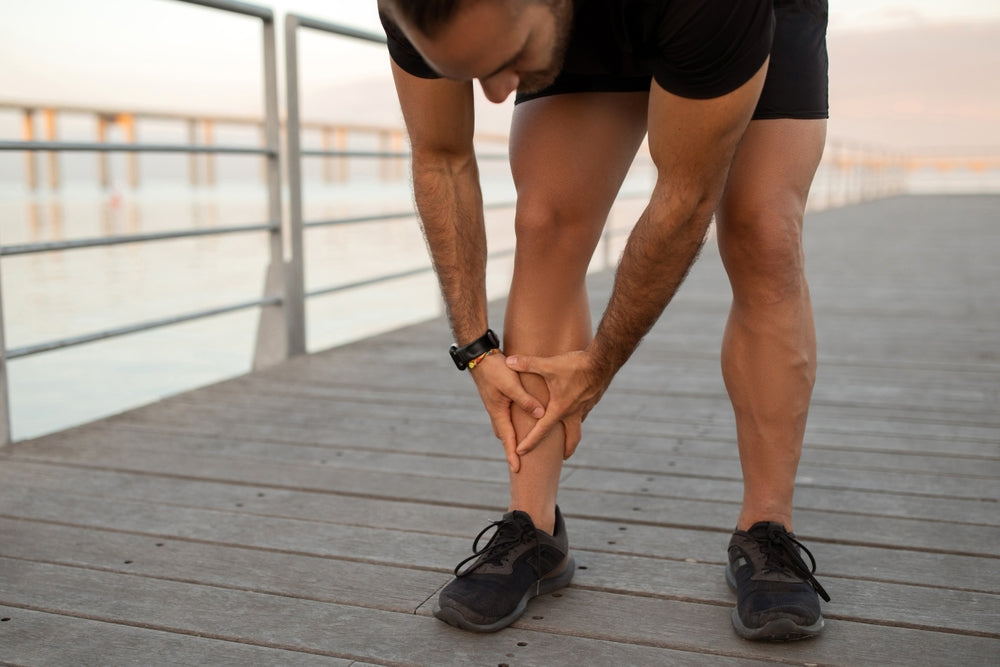
A man in black athletic wear bends over to examine his lower leg on a wooden boardwalk by the water.

Understanding Your Pain

What happens when the posterior tibial tendon fails?

The posterior tibial tendon runs from the calf muscle down behind the inner ankle bone (medial malleolus) and attaches to the navicular and other midfoot bones. Its primary job is to support the medial arch during gait and assist supination during push-off.

When the tendon degenerates — from chronic overload, age, or injury — it can no longer support the arch effectively. The foot progressively pronates and the arch collapses. This is called adult-acquired flat foot deformity (AAFD).

PTTD progresses through stages:

Stage 1: Tendon inflammation and pain, but the arch shape is maintained. The tendon still functions. This is the most responsive stage to orthotic intervention.

Stage 2: The tendon elongates and weakens. The arch begins to flatten. The foot can still be manually corrected to a neutral position (flexible deformity). Orthotics are essential to slow progression.

Stage 3-4: The deformity becomes rigid. The hindfoot may develop arthritis. Surgery may be required. Orthotics can still help manage symptoms but cannot correct a rigid deformity.

Why early intervention matters

PTTD in Stages 1 and 2 responds well to orthotic intervention. The orthotic takes over the tendon's job of resisting pronation, reducing the workload on the damaged tendon and slowing or halting the progressive arch collapse. Delay allows the deformity to progress to the point where only surgery can help. If you suspect PTTD, see a specialist promptly.

Your Treatment Plan

Your path to healing — step by step

Jump in at the stage that matches where you are right now.

1

Urgent — Get a professional diagnosis

PTTD needs specialist assessment

PTTD is a progressive condition that requires professional staging and monitoring. Self-treatment without diagnosis risks allowing the deformity to advance.
  • See a podiatrist or orthopaedic foot and ankle specialist - for clinical examination, staging, and imaging if needed.

  • Single-leg heel raise test - if you cannot perform a single-leg heel raise on the affected side, or the heel doesn't invert during the raise, PTTD is likely.

  • Stage determines treatment: Stages 1-2 respond well to conservative treatment (orthotics + physiotherapy). Stages 3-4 may require surgical consultation.

2

Immediate — Support and reduce tendon load

Take the strain off the tendon

  • Structured supportive shoes - firm heel counter, arch support, and a stable midsole are essential. The tendon cannot support the arch alone — the shoe and orthotic must help.

  • Reduce high-impact activity - limit running and jumping while the tendon is inflamed.

  • Ice along the inner ankle - 15–20 minutes after activity to reduce inflammation.

  • Ankle brace - in acute stages, a lace-up ankle brace provides additional medial support while symptoms settle.

3

The essential treatment — Orthotic support

The orthotic does what the tendon can't

In PTTD, the posterior tibial tendon can no longer adequately resist pronation. The orthotic takes over this role — resisting the pronation forces mechanically so the damaged tendon isn't forced to work beyond its diminished capacity.
  • Rearfoot Wedge - the most critical feature for PTTD. Inverts the calcaneus and directly resists the pronation forces that the failing tendon can no longer control.

  • Arch height matching - the correct arch height supports the foot without forcing it into an uncomfortable position. The Modular System lets you find the right level.

  • 1st Cutaway + Plantar Fascial Groove - assist supination during push-off, further reducing the work the posterior tibial tendon must perform.

Orthotics are the cornerstone of conservative PTTD treatment. By taking over the pronation-resisting role of the damaged tendon, they reduce tendon load, slow deformity progression, and allow rehabilitation to strengthen the remaining tendon function. Early orthotic intervention is the single most important step in preventing surgical intervention.

4

Rehabilitation + ongoing management

Strengthen what remains

  • Physiotherapy - progressive strengthening of the posterior tibial tendon, calf complex, and intrinsic foot muscles. Eccentric and isometric exercises are most effective.

  • Wear the Model P daily - permanently - PTTD is a lifelong condition. The orthotic must be worn consistently to prevent progressive deformity.

  • Regular monitoring - see your specialist periodically to track deformity progression and adjust management.

  • Multiple pairs recommended - have a Model P in every pair of shoes you wear regularly to ensure consistent support throughout the day.

Why Interpod Works

Four design features that resist pronation and assist supination

Generic insoles only have arch support. Interpod has four biomechanical design features — the same features found in custom orthotics costing $500+.

  • Plantar Fascial Groove ★

    A groove engineered into the orthotic to accommodate the plantar fascia. Reduces the force needed to establish the windlass mechanism — the foot's natural arch-raising system. Directly reduces the strain that causes plantar fasciitis.

    Assits supination
  • Rearfoot Wedge ★

    Resists the excessive pronation forces that over-flatten the arch and overload the plantar fascia. By inverting the calcaneus, it reduces the strain transmitted to the fascia during loading.

    Resists pronation
  • 1st Cutaway

    Allows the first metatarsal to plantarflex naturally during push-off, enabling the windlass mechanism to function properly without interference from the orthotic.

    Assits supination
  • Cuboid Notch

    Assists supination during the transition from midstance to push-off, stabilising the lateral column. Typically only found in custom-made orthotics.

    Resists pronation

Common Questions

Posterior Tibial Tendon Dysfunction FAQs

Can orthotics fix PTTD?

Orthotics cannot repair the damaged tendon or reverse existing deformity. But they can significantly reduce symptoms, slow or halt progression, and in Stages 1-2, prevent the need for surgery. They work by taking over the pronation-resisting function of the failing tendon — mechanically supporting the arch so the tendon isn't overwhelmed.

Do I need custom orthotics for PTTD?

Research from La Trobe University found no difference in comfort or fit between Interpod prefabricated orthotics and custom-made devices. Interpod includes all four biomechanical design features found in custom orthotics — including the Rearfoot Wedge that is critical for PTTD management. For mild to moderate PTTD (Stages 1-2), Interpod orthotics are an effective alternative. For advanced PTTD (Stage 3+), your specialist may recommend custom devices with additional modifications.

Will I need to wear orthotics forever?

Yes — PTTD is typically a lifelong condition. The tendon degeneration doesn't reverse, so the orthotic must continue to provide the pronation resistance the tendon can no longer deliver. Consistent daily use is essential to prevent progressive arch collapse. The Model P's 5-year warranty and durable NeuroFlex™ material make it well-suited for long-term daily use.

When is surgery needed?

Surgery is considered when PTTD progresses to Stage 3 (rigid deformity) or when conservative treatment fails to manage symptoms in Stage 2. Surgical options range from tendon repair to osteotomy to joint fusion, depending on severity. Even after surgery, orthotics are typically recommended to support the correction. Consult your orthopaedic foot and ankle specialist for surgical assessment.

What if the orthotics don't help?

You're covered by our 90-day full refund guarantee. If symptoms don't improve, your PTTD may have progressed beyond the stage where prefabricated orthotics are sufficient. Consult your specialist about custom devices or surgical options. Contact us at help@interpod-orthotics.com.

Related Conditions

Interpod also treats

Start your path to lasting relief today

Australians have discovered that the right support can make everyday movement easier. Find the Interpod orthotic that suits your needs.

Try risk-free — 90-day full refund guarantee.