

Shin splints — your path to healing

Medial tibial stress syndrome (shin splints) is one of the most common overuse injuries in runners and active people. Excessive pronation is the primary biomechanical risk factor — and it's exactly what Interpod is engineered to address.

🎓 8 independent university studies

🔬 Prefabricated orthotics proven to reduce MTSS in naval recruits

📊 Affects up to 1 in 5 runners

Does this sound like you?

Recognise any of these symptoms?

  • Pain along the inside of the shin bone during or after running

  • Tenderness or soreness along the lower two-thirds of the tibia

  • Pain that starts during exercise but eases when you stop

  • Mild swelling along the inner edge of the shin

  • Pain that gets worse with each run or training session

  • Discomfort when pressing along the medial tibial border
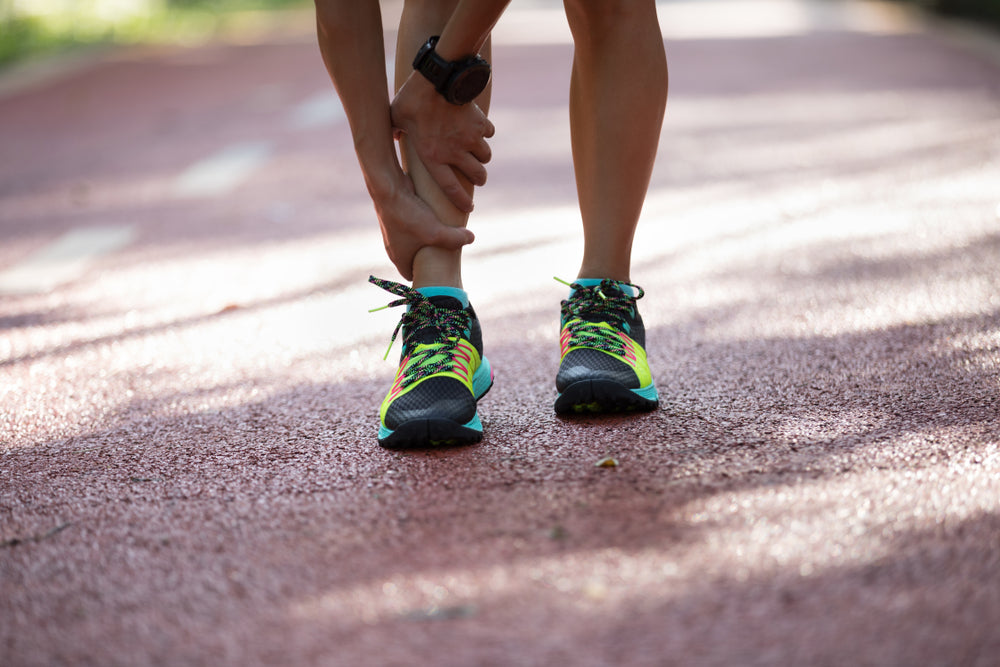
Shin splints affect up to 20% of runners and are extremely common in military recruits and athletes. The good news: they respond well to biomechanical correction combined with load management.

A close-up of a runner's legs and feet on a reddish-brown running track, holding their shin. They are wearing black athletic shoes with bright neon green and turquoise accents, along with a black smartwatch.

Understanding Your Pain

What's actually happening in your shins?

Shin splints — medically called medial tibial stress syndrome (MTSS) — is an overuse injury caused by repetitive stress on the tibia (shin bone) and the muscles, tendons, and periosteum that attach to it.

The pronation connection: When your foot pronates excessively during each step, the tibialis posterior muscle and soleus muscle are forced to work harder to decelerate and stabilise the foot. These muscles attach along the medial border of the tibia. Repeated overload causes traction stress on the bone surface (periosteum), leading to inflammation, micro-damage, and the characteristic pain along the inside of the shin.

Training errors — too much, too soon, too fast — are often the trigger. But the underlying biomechanical vulnerability is excessive pronation. This is why shin splints frequently recur after rest: the loading returns, but the foot mechanics haven't changed.

Left untreated, MTSS can progress to a tibial stress fracture. Early intervention with load management and biomechanical correction is essential.

Why runners get shin splints

Running generates 2.5–3x body weight in ground reaction force with every stride. In a pronating foot, this force is transmitted through the medial structures of the lower leg on every single step. Over thousands of repetitions, these tissues reach their failure point. Orthotics that control pronation reduce the traction stress on the tibia — addressing the cause, not just the symptom.

Your Treatment Plan

Your path to healing — step by step

Jump in at the stage that matches where you are right now.

1

Right now — Reduce the load

Stop the overload cycle

Shin splints are a loading injury. Your first step is to reduce the repetitive stress that's causing the tissue damage.
  • Reduce running volume immediately - don't stop completely unless pain is severe. Drop to 50% of your current volume and run on softer surfaces where possible.

  • Ice after activity - apply ice along the medial shin for 15–20 minutes after any weight-bearing exercise.

  • Anti-inflammatory medication - NSAIDs can help manage acute inflammation. Consult your pharmacist.

  • Cross-train - maintain fitness with low-impact activities: cycling, swimming, pool running. These don't load the tibia the same way.

  • Don't push through the pain - shin splints can progress to a stress fracture if loading continues beyond the tissue's capacity.

2

This week — Stretch, strengthen, support

Address contributing factors

  • Calf stretches - tight calves limit ankle dorsiflexion, forcing compensatory pronation. Stretch gastrocnemius and soleus daily, 30 seconds each.

  • Check your running shoes - shoes lose 40% of shock absorption after 400–500km. If your shoes are worn, replace them.

  • Toe raises and heel walks - strengthen the anterior tibialis to improve shock absorption along the shin.

  • Single-leg calf raises - strengthen the posterior chain. 3 sets of 12, every other day.

3

Weeks 2–6 — Graded return and rehabilitation

Build back smarter

If your shin splints keep recurring every time you return to running, the problem isn't loading — it's biomechanics. But proper rehabilitation still matters.
  • Physiotherapy - gait analysis, manual therapy, and a structured return-to-run programme. A physio can identify hip weakness, tight calves, or running form issues contributing to tibial stress.

  • Graded running programme - increase volume by no more than 10% per week. Alternate running days with rest or cross-training days.

  • Hip and glute strengthening - weak hips allow the knee to collapse inward during stance, increasing pronation forces at the foot and tibial stress.

  • Consider running gait retraining - a midfoot strike pattern may reduce tibial impact loading compared to heel striking.

4

The long-term solution — Address the pronation

Biomechanical correction with the Model P

  • Rearfoot Wedge - inverts the calcaneus and reduces the pronation forces that cause traction stress on the medial tibia. Proven more effective than competing orthotics.

  • Cuboid Notch - assists supination during push-off, reducing the duration of pronation during stance phase.

  • Plantar Fascial Groove - improves windlass mechanism efficiency, helping the foot supinate earlier in the gait cycle.

  • 1st Cutaway - allows natural forefoot function, improving push-off efficiency and reducing compensatory loading.

Shin splints are a force problem that rest alone cannot solve. Research on naval recruits showed that prefabricated orthotics controlling pronation significantly reduced the incidence of MTSS. The Model P addresses the biomechanical cause — not just the symptoms.

5

Ongoing — Train without fear

Prevent recurrence

  • Wear orthotics in all running shoes - consider the Model S ($75) for a slimmer fit in athletic shoes, or a second Model P for training shoes.

  • Follow the 10% rule - never increase weekly running volume by more than 10%.

  • Replace running shoes every 500–700km - worn shoes lose shock absorption and structural support.

  • Maintain calf and hip strength - continue strengthening exercises 2–3 times per week.

Why Interpod Works

Four design features that resist pronation and assist supination

Generic insoles only have arch support. Interpod has four biomechanical design features — the same features found in custom orthotics costing $500+.

  • Plantar Fascial Groove ★

    A groove engineered into the orthotic to accommodate the plantar fascia. Reduces the force needed to establish the windlass mechanism — the foot's natural arch-raising system. Directly reduces the strain that causes plantar fasciitis.

    Assits supination
  • Rearfoot Wedge ★

    Resists the excessive pronation forces that over-flatten the arch and overload the plantar fascia. By inverting the calcaneus, it reduces the strain transmitted to the fascia during loading.

    Resists pronation
  • 1st Cutaway

    Allows the first metatarsal to plantarflex naturally during push-off, enabling the windlass mechanism to function properly without interference from the orthotic.

    Assits supination
  • Cuboid Notch

    Assists supination during the transition from midstance to push-off, stabilising the lateral column. Typically only found in custom-made orthotics.

    Resists pronation

Common Questions

Shin Splints FAQs

Can I keep running with shin splints?

It depends on severity. Mild shin pain that only appears at the end of a run may allow continued training at reduced volume. But if pain starts early in the run, is present during walking, or is worsening session to session — stop running and cross-train until symptoms settle. Continuing to run through significant shin splint pain risks progression to a tibial stress fracture.

Do orthotics help shin splints?

Yes. Research on naval recruits demonstrated that prefabricated orthotics controlling pronation reduced the incidence of MTSS. Excessive pronation is the primary biomechanical risk factor for shin splints. Interpod orthotics address this with the Rearfoot Wedge (resists pronation) and three additional design features that work together to reduce the traction forces on the medial tibia.

Should I get the Model P or the Model S for running?

The Model P ($85) provides the highest level of support (9/10) and is recommended for pain relief and biomechanical correction. The Model S ($75) has a slimmer profile (10/10 shoe fit) designed specifically for athletic shoes, with moderate support (5/10). For active shin splints, start with the Modular System to find your ideal arch height, then consider the Model S for running and the Model P for everyday shoes.

How long does it take for shin splints to heal?

Mild shin splints can resolve in 2–4 weeks with proper load management and biomechanical support. More severe or chronic cases may take 6–12 weeks. The key factor in recovery speed is addressing the pronation forces — without this, shin splints commonly recur the moment training load increases.

What if the orthotics don't help?

You're covered by our 90-day full refund guarantee. If your shin splints don't improve, we recommend consulting a sports podiatrist or physiotherapist for a comprehensive biomechanical assessment — a tibial stress fracture or compartment syndrome should be ruled out. Contact us at help@interpod-orthotics.com for guidance.

Related Conditions

Interpod also treats

Start your path to lasting relief today

Australians have discovered that the right support can make everyday movement easier. Find the Interpod orthotic that suits your needs.

Try risk-free — 90-day full refund guarantee.