

Lower back pain — could your feet be the cause?

Your feet are the foundation of your body. When they over-pronate, the entire kinetic chain above — ankles, knees, hips, pelvis — compensates. For many people, this compensation ends at the lower back. Interpod addresses the cause from the ground up.

🎓 8 independent university studies

🔬 Pronation drives tibial rotation → pelvic tilt → lumbar stress

Does this sound like you?

Recognise any of these symptoms?

  • Dull ache in the lower back after walking or standing for long periods

  • Back pain that gets worse on hard surfaces or in flat shoes

  • Flat feet, over-pronation, or visible inward ankle rolling

  • Back pain with no obvious spinal cause (no disc or nerve issues)

  • One-sided back pain that could indicate asymmetric foot mechanics

  • Back pain that improves when wearing supportive shoes vs. flat shoes
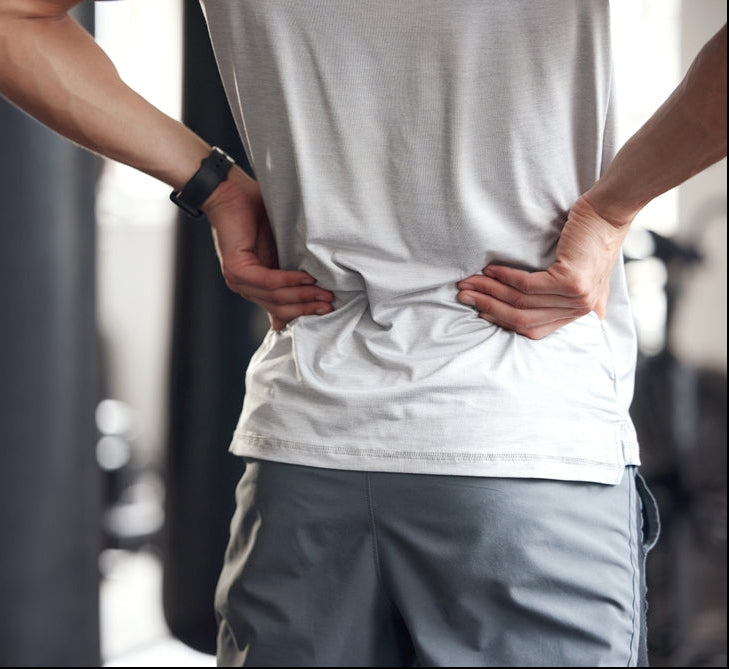
Not all back pain comes from the back. If your lower back pain has no clear spinal cause, is associated with prolonged standing or walking, and you have flat feet or over-pronation — your feet may be the hidden driver.

A man from behind wearing a light gray t-shirt and gray athletic shorts, holding his lower back in pain.

Understanding Your Pain

How your feet affect your lower back

The kinetic chain connects your feet to your spine through a series of linked joints. Each joint's position influences the one above it. When the foot over-pronates, it triggers a cascade of compensatory movements:

Foot pronation → tibial internal rotation → knee valgus → femoral internal rotation → pelvic anterior tilt → increased lumbar lordosis.

This increased curvature of the lower spine compresses the facet joints and increases strain on the lumbar muscles, ligaments, and discs. If this happens with every step — thousands of times per day — the cumulative stress on the lower back becomes significant.

Asymmetric pronation (one foot pronating more than the other) can also create a functional leg length difference, tilting the pelvis to one side and producing one-sided back pain.

This is why conventional back treatment sometimes fails: if the compensatory forces from the feet aren't addressed, the back continues to be loaded abnormally regardless of how much core strengthening, massage, or manipulation you receive.

Important caveat

Foot biomechanics are one possible contributor to lower back pain — not the only cause. Disc disease, nerve compression, spinal stenosis, and other conditions require specific medical treatment. If your back pain is severe, radiating into the legs, or accompanied by numbness or weakness, see a doctor first. Orthotics are most effective for mechanical lower back pain associated with pronation.

Your Treatment Plan

Your path to healing — step by step

Jump in at the stage that matches where you are right now.

1

First — Rule out serious causes

Get the right diagnosis

Lower back pain has many causes. Before assuming your feet are the driver, ensure serious spinal conditions have been ruled out.
  • See a doctor or physiotherapist - if your back pain is severe, radiates into your legs, or is accompanied by numbness, tingling, or weakness. These symptoms may indicate disc or nerve involvement requiring specific treatment.

  • Check your feet - look at your feet from behind while standing. If the heels tilt inward and arches are low, pronation may be contributing. Note whether the pronation is worse on the side of your back pain.

  • Supportive footwear - if back pain is worse in flat shoes or on hard surfaces, try wearing structured shoes with arch support for a week. If pain improves, the foot-back connection is likely relevant.

2

The missing piece — Your feet

Why back treatment alone isn't working

If you've been doing core strengthening, seeing a physio or chiro, and the back pain keeps returning — the compensatory forces from your feet may be the missing piece. Treating the back without addressing the foundation is like fixing the roof while ignoring the cracked foundation.
  • Continue core and hip strengthening - these remain important for spinal stability. Orthotics complement this, they don't replace it.

  • Calf stretching - tight calves force compensatory pronation, which drives the kinetic chain cascade up to the back. Stretch daily.

  • Get a biomechanical assessment - a podiatrist can evaluate your foot mechanics and determine if orthotics are indicated alongside your back treatment.

3

The solution — Correct from the ground up

Biomechanical correction with the Model P

By controlling pronation at the foot, the Model P reduces the cascade of compensatory rotations up the kinetic chain — reducing the abnormal forces on the lower back.
  • Rearfoot Wedge - inverts the calcaneus and reduces tibial internal rotation — the first link in the kinetic chain to the back.

  • Four design features working together - resist pronation and assist supination throughout the gait cycle, reducing compensatory pelvic and lumbar stress with every step.

Your feet hit the ground 8,000–10,000 times per day.If each step drives compensatory rotation up through your pelvis and spine, the cumulative stress on your lower back is enormous. Correcting the foundation changes everything above it.

4

Ongoing — Protect your back long-term

Maintain and prevent recurrence

  • Wear orthotics daily - the pronation forces are present with every step.

  • Continue core and hip strengthening - orthotics address the foundation, core strength protects the spine directly. Both matter.

  • Work boot support - if you're on your feet all day in work boots, Model W is launching Q3 2026 with a full-length carbon plate. For immediate support, Model P ($85) works well in most work footwear.

  • Avoid prolonged standing in flat shoes - the effect is cumulative. Always wear supported footwear with orthotics.

Why Interpod Works

Four design features that resist pronation and assist supination

Generic insoles only have arch support. Interpod has four biomechanical design features — the same features found in custom orthotics costing $500+.

  • Plantar Fascial Groove ★

    A groove engineered into the orthotic to accommodate the plantar fascia. Reduces the force needed to establish the windlass mechanism — the foot's natural arch-raising system. Directly reduces the strain that causes plantar fasciitis.

    Assits supination
  • Rearfoot Wedge ★

    Resists the excessive pronation forces that over-flatten the arch and overload the plantar fascia. By inverting the calcaneus, it reduces the strain transmitted to the fascia during loading.

    Resists pronation
  • 1st Cutaway

    Allows the first metatarsal to plantarflex naturally during push-off, enabling the windlass mechanism to function properly without interference from the orthotic.

    Assits supination
  • Cuboid Notch

    Assists supination during the transition from midstance to push-off, stabilising the lateral column. Typically only found in custom-made orthotics.

    Resists pronation

Common Questions

Lower Back Pain FAQs

Can insoles really help lower back pain?

Yes — when the back pain is being driven by compensatory forces from excessive pronation. By correcting foot alignment, orthotics reduce the cascade of rotations up the kinetic chain that stress the lower back. However, orthotics are not a treatment for disc disease, nerve compression, or other primary spinal conditions. They work best for mechanical lower back pain associated with prolonged standing, walking, and pronation.

How do I know if my feet are causing my back pain?

Signs include: back pain that's worse after prolonged standing or walking; pain that improves in supportive shoes vs. flat shoes; visible flat feet or over-pronation; one-sided back pain with asymmetric foot mechanics; and no clear spinal cause identified by a doctor. A podiatrist can assess the biomechanical connection.

Should I stop seeing my physio if I get orthotics?

No — orthotics and physiotherapy are complementary, not alternatives. Orthotics address the biomechanical forces from below. Physiotherapy strengthens core stability from above. Together, they address both ends of the kinetic chain for the most comprehensive outcome.

What if the orthotics don't help my back pain?

You're covered by our 90-day full refund guarantee. If back pain doesn't improve, the biomechanical connection may not be the primary driver — continue working with your doctor or physiotherapist. Contact us at help@interpod-orthotics.com.

Related Conditions

Interpod also treats

Start your path to lasting relief today

Australians have discovered that the right support can make everyday movement easier. Find the Interpod orthotic that suits your needs.

Try risk-free — 90-day full refund guarantee.