

Knee pain — it may start at your feet

Many cases of knee pain are driven by what happens below the knee — specifically, excessive pronation at the foot. When the foot rolls inward, the tibia internally rotates, changing the alignment and loading of the knee joint. Interpod addresses this from the ground up.

🎓 8 independent university studies

🔬 Duquesne University confirmed Interpod controls tibial rotation

📊 Foot pronation linked to patellofemoral pain and ITB syndrome

Does this sound like you?

Recognise any of these symptoms?

  • Pain around or behind the kneecap, especially going up or down stairs

  • Aching after prolonged sitting with bent knees

  • Pain on the outside of the knee during or after running

  • Knee pain that gets worse with increased activity

  • Flat feet or visible inward rolling of the feet and ankles

  • Knee pain that's not explained by a specific injury
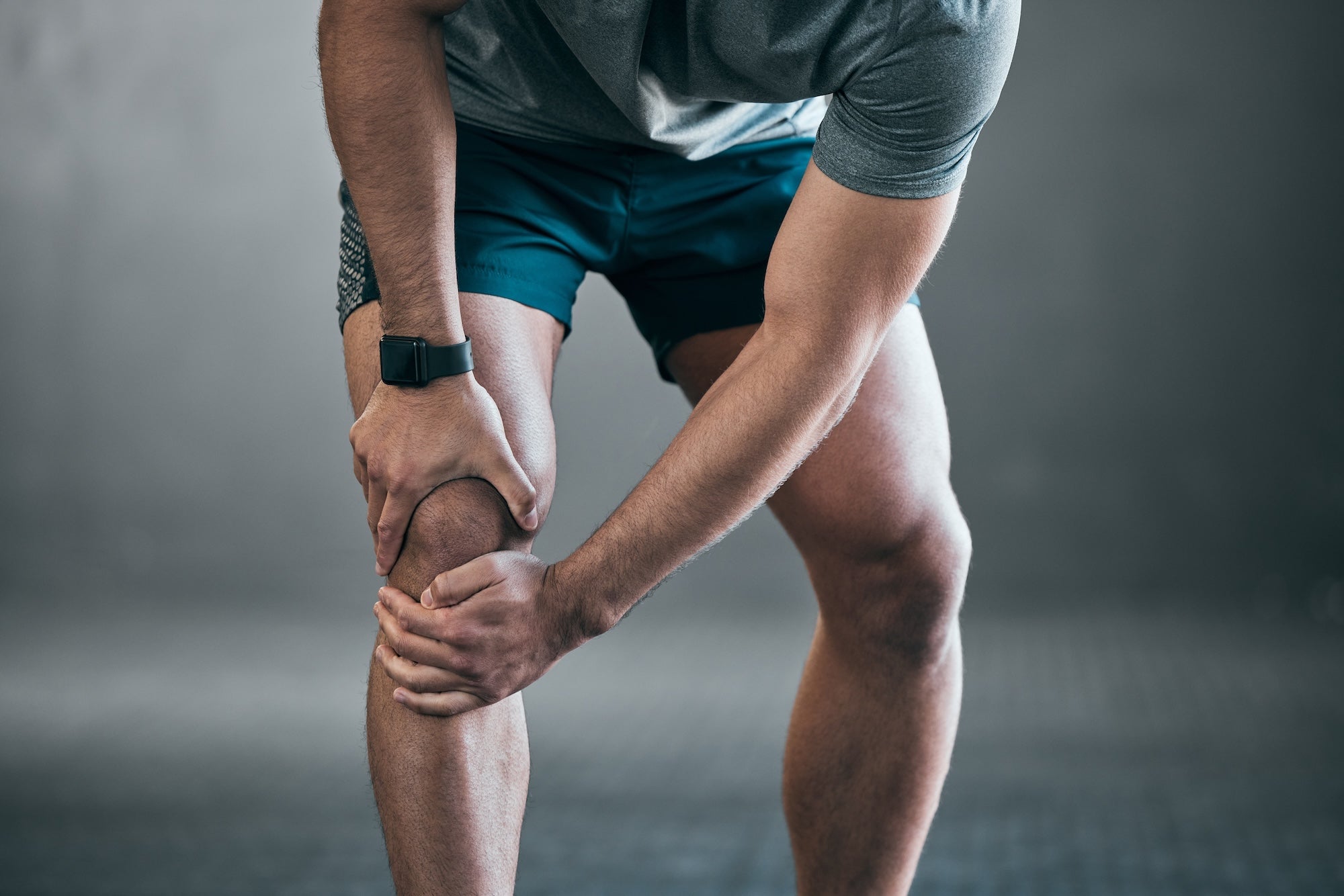
Not all knee pain comes from the knee. If your knee pain has no obvious injury cause and is associated with flat feet, pronation, or activity — foot biomechanics may be the hidden driver.

man holding his knee in pain

Understanding Your Pain

The foot-knee connection

Your foot and knee are connected through the tibia (shin bone). When the foot pronates, the tibia internally rotates. This changes the alignment of the kneecap (patella) relative to the femur, increasing stress on the patellofemoral joint and the iliotibial band (ITB).

Patellofemoral pain syndrome (runner's knee): Excessive tibial internal rotation from foot pronation causes the patella to track abnormally in its groove. The result is pain around or behind the kneecap, especially with stairs, squatting, and prolonged sitting.

ITB syndrome: Internal rotation of the tibia increases tension on the iliotibial band where it crosses the lateral knee. This produces the characteristic pain on the outside of the knee during running.

The Duquesne University study confirmed that Interpod orthotics significantly control tibial rotation — the exact mechanism that drives these knee conditions. By resisting pronation at the foot, the orthotic reduces the rotational forces that stress the knee.

The kinetic chain

The foot is the foundation of the kinetic chain. Excessive pronation doesn't just affect the foot — it creates a cascade of compensatory movement up through the ankle, tibia, knee, hip, and lower back. Correcting the foundation changes everything above it.

Your Treatment Plan

Your path to healing — step by step

Jump in at the stage that matches where you are right now.

1

Right now — Manage the pain

Immediate relief

  • Reduce aggravating activities - limit stairs, squatting, kneeling, and high-impact exercise temporarily.

  • Ice the knee - 15–20 minutes after activity, particularly around the kneecap or lateral knee.

  • Anti-inflammatory medication - NSAIDs for short-term pain management. Consult your pharmacist.

  • Check your feet - look at your feet and ankles from behind. If the heels tilt inward (evert) and the arches are low, pronation may be contributing to your knee pain.

2

This week — Strengthen the chain

Build stability above and below the knee

  • Glute and hip strengthening - weak glutes allow the knee to collapse inward (valgus). Side-lying hip abductions, clamshells, single-leg bridges. 3 sets of 12, 3 times per week.

  • Quadriceps strengthening - particularly VMO (inner quad). Wall sits, terminal knee extensions, step-downs.

  • Calf and ankle stretching - limited ankle dorsiflexion forces compensatory pronation. Stretch calves daily.

  • Supportive footwear - wear structured shoes with a firm heel counter. Avoid flat, unsupportive footwear.

3

Weeks 2–6 — Professional assessment

Identify the root cause

If knee pain persists despite strengthening, the biomechanical forces from the foot may be the missing piece. Many physiotherapists treat the knee without assessing the foot — and the pain keeps returning.
  • Physiotherapy with gait assessment - ask your physio to assess your foot biomechanics and tibial rotation during gait, not just the knee itself.

  • Podiatry assessment - a podiatrist can evaluate subtalar joint axis position and pronation forces to determine if orthotics are indicated.

  • Continue hip and quad strengthening - biomechanical correction from below (orthotics) combined with strengthening from above (hip/glutes) addresses both ends of the kinetic chain.

4

The long-term solution — Correct from the ground up

Biomechanical correction with the Model P

By resisting excessive pronation at the foot, the Model P reduces tibial internal rotation — directly reducing the forces that stress the knee joint.
  • Rearfoot Wedge - inverts the calcaneus and resists pronation, reducing tibial internal rotation and knee valgus stress.

  • Cuboid Notch - assists supination, further reducing the rotational forces transmitted up the kinetic chain.

  • 1st Cutaway + Plantar Fascial Groove - improve gait efficiency during push-off, reducing compensatory knee loading.

Treating knee pain without addressing the foot is like treating the symptom without finding the cause.Duquesne University research confirmed that Interpod orthotics control tibial rotation — the exact mechanism linking foot pronation to knee pain.

5

Ongoing — Protect your knees long-term

Maintain and prevent recurrence

  • Wear the Model P daily - the biomechanical forces are present with every step, not just when pain is present.

  • Maintain hip and glute strength - continue strengthening exercises 2–3 times per week.

  • Gradual activity progression - avoid sudden spikes in training load.

  • Consider a second pair - many customers buy a second Model P for running or work shoes.

Why Interpod Works

Four design features that resist pronation and assist supination

Generic insoles only have arch support. Interpod has four biomechanical design features — the same features found in custom orthotics costing $500+.

  • Plantar Fascial Groove ★

    A groove engineered into the orthotic to accommodate the plantar fascia. Reduces the force needed to establish the windlass mechanism — the foot's natural arch-raising system. Directly reduces the strain that causes plantar fasciitis.

    Assits supination
  • Rearfoot Wedge ★

    Resists the excessive pronation forces that over-flatten the arch and overload the plantar fascia. By inverting the calcaneus, it reduces the strain transmitted to the fascia during loading.

    Resists pronation
  • 1st Cutaway

    Allows the first metatarsal to plantarflex naturally during push-off, enabling the windlass mechanism to function properly without interference from the orthotic.

    Assits supination
  • Cuboid Notch

    Assists supination during the transition from midstance to push-off, stabilising the lateral column. Typically only found in custom-made orthotics.

    Resists pronation

Common Questions

Knee Pain FAQs

Can foot orthotics really help knee pain?

Yes — when the knee pain is being driven by excessive foot pronation. Pronation causes internal rotation of the tibia, which changes the alignment and loading of the knee joint. Duquesne University research confirmed that Interpod orthotics significantly control tibial rotation. By correcting the foot, you reduce the forces that stress the knee. However, orthotics are most effective when combined with hip and quad strengthening to address the full kinetic chain.

How do I know if my feet are causing my knee pain?

Look at your feet from behind while standing. If your heels tilt inward and your arches are low, you likely have excessive pronation. If your knee pain has no obvious injury cause and is associated with running, stairs, or increased activity — foot biomechanics should be assessed. A podiatrist or physiotherapist with gait analysis expertise can confirm the connection.

Will orthotics help runner's knee?

Runner's knee (patellofemoral pain syndrome) is one of the conditions most responsive to foot orthotic intervention. By reducing tibial internal rotation, the orthotic helps the patella track more naturally in its groove, reducing the compressive and shearing forces that cause pain. The Modular System ($119) lets you find the right level of support at home.

What if my knee pain has a different cause?

Not all knee pain is biomechanically driven. If your pain follows a specific injury, is accompanied by significant swelling, locking, or giving way — see a doctor or physiotherapist for proper diagnosis. Orthotics are most effective for overuse-type knee pain associated with pronation, not acute ligament or meniscal injuries.

What if the orthotics don't help my knee pain?

You're covered by our 90-day full refund guarantee. If your knee pain doesn't improve, the biomechanical connection may not be the primary driver — consult a physiotherapist or orthopaedic specialist. Contact us at help@interpod-orthotics.com for guidance.

Related Conditions

Interpod also treats

Start your path to lasting relief today

Australians have discovered that the right support can make everyday movement easier. Find the Interpod orthotic that suits your needs.

Try risk-free — 90-day full refund guarantee.