

Bunions — slow the progression, reduce the pain

Bunions are a progressive deformity driven by excessive pronation forces on the big toe joint. Orthotics can't reverse a bunion — but they can reduce pain, slow progression, and delay or prevent the need for surgery.

🎓 8 independent university studies

🔬 75% of podiatrists recommend orthotics for bunions

📊 Affects 23–35% of adults, 3x more common in women

Does this sound like you?

Recognise any of these symptoms?

  • A visible bump on the inside of your foot at the big toe joint

  • Big toe leaning toward the second toe

  • Pain, swelling, or redness around the big toe joint

  • Pain that's worse in tight or narrow shoes

  • Calluses where the first and second toes overlap

  • Difficulty finding shoes that fit comfortably
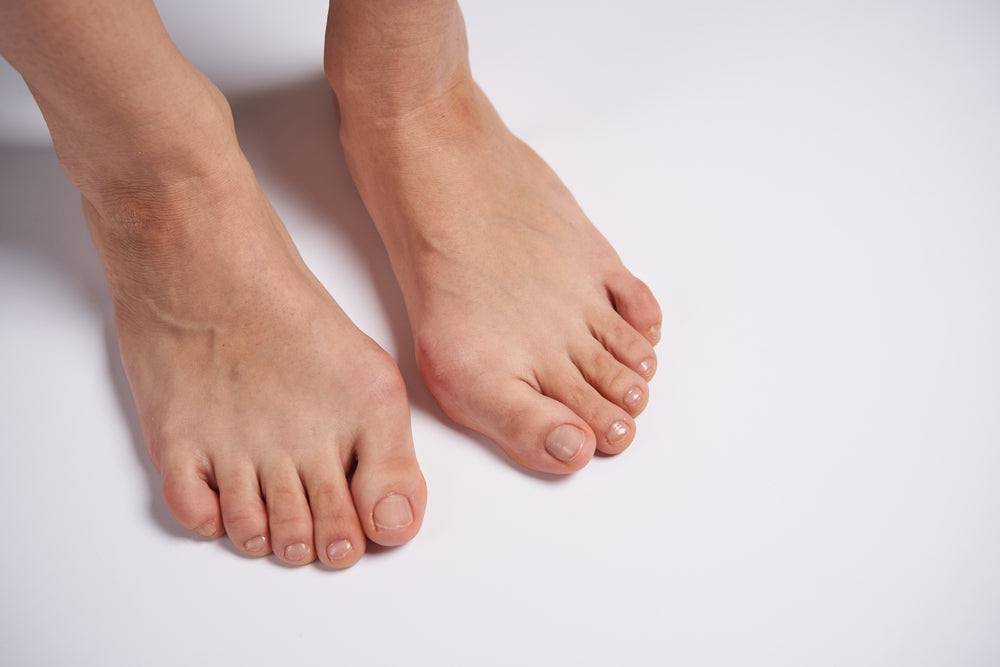
Bunions are progressive — they get worse over time without intervention.The earlier you address the biomechanical forces driving the deformity, the better the long-term outcome.

Two feet with bunions on a white background

Understanding Your Pain

A bunion isn't just a bump — it's a joint dislocation

A bunion (hallux abducto valgus) develops when the first metatarsal bone drifts inward while the big toe (hallux) drifts outward toward the smaller toes. The joint at the base of the big toe progressively dislocates, creating the characteristic bump.

The pronation connection: When the foot excessively pronates, it unlocks the midfoot and increases the load on the medial forefoot. This adductory force pushes the first metatarsal inward while the ground reaction force pushes the big toe outward. Over thousands of steps per day, this gradually worsens the deformity.

While tight shoes can aggravate bunion pain, they don't cause bunions. The root cause is biomechanical instability — specifically, excessive pronation that creates abnormal forces on the big toe joint.

Orthotics can't reverse the bone deformity. But by controlling pronation and reducing the forces on the big toe joint, they can significantly reduce pain, slow or halt progression, and in many cases delay or prevent surgery.

The 1st Cutaway advantage

Most rigid orthotics block the first ray from plantarflexing during push-off, which can actually worsen bunion mechanics. Interpod's 1st Cutaway specifically allows natural first ray function — enabling the big toe to move properly while the Rearfoot Wedge controls the pronation forces above.

Your Treatment Plan

Your path to healing — step by step

Jump in at the stage that matches where you are right now.

1

Early stage — Protect the joint

Early intervention

If you're noticing the early signs of a bunion — a slight bump, the big toe angling inward — now is the most important time to act. The earlier you address the biomechanical forces, the more you can slow progression.
  • Wear wide-fitting shoes - avoid narrow, pointed shoes that compress the forefoot. Choose shoes with a wide toe box that allows the toes to spread naturally.

  • Supportive footwear - shoes with a firm heel counter and arch support reduce pronation forces on the big toe joint.

  • Toe exercises - toe spreads, big toe stretches, and marble pickups maintain mobility and strength in the forefoot.

  • Avoid high heels - heels shift body weight onto the forefoot and compress the toes, accelerating bunion progression.

2

Moderate stage — Manage pain and protect

Reduce pain without surgery

  • Ice the joint - 15 minutes after activity to reduce inflammation and swelling around the bunion.

  • Bunion pads or sleeves - silicone pads reduce friction between the bunion and your shoe. A short-term comfort measure.

  • Toe spacers - place between the big toe and second toe to reduce overlap pressure and maintain alignment during the day.

  • Anti-inflammatory medication - NSAIDs for flare-ups. Consult your pharmacist.

  • See a podiatrist - early assessment can determine the severity and progression rate, and guide whether orthotics, wider shoes, or other interventions are most appropriate.

3

Active treatment — Address the driving force

Why bunion pads aren't enough

Pads, spacers, and wider shoes manage the symptoms and reduce friction — but they don't change the biomechanical forces that are progressively dislocating the joint. To slow or halt bunion progression, you need to reduce the pronation forces that drive the deformity.
  • Foot and ankle strengthening - intrinsic foot exercises, calf stretches, and single-leg balance work to improve dynamic foot stability.

  • Gait assessment - a podiatrist or physiotherapist can assess your pronation pattern and determine the level of orthotic support needed.

4

The long-term solution — Biomechanical correction

Reduce the forces that drive bunion progression

  • Rearfoot Wedge - resists the excessive pronation that unlocks the midfoot and drives the adductory force on the first metatarsal. This is the primary mechanism for slowing bunion progression.

  • 1st Cutaway - critically important for bunions. Allows the first ray to plantarflex naturally during push-off, reducing compensatory forces on the big toe joint. Many rigid orthotics actually worsen bunion mechanics by blocking this motion.

  • Plantar Fascial Groove - improves windlass mechanism efficiency, helping the foot supinate and stabilise during push-off without excessive loading on the big toe.

  • Cuboid Notch - assists supination during push-off, stabilising the lateral column and reducing medial forefoot overload.

Orthotics can't reverse a bunion, but they can stop the forces that make it worse.By controlling pronation and allowing natural first ray function, the Model P reduces the deforming forces on the big toe joint — potentially delaying or preventing the need for surgery.

5

Ongoing — Long-term management

Protect the joint for life

  • Wear the Model P daily - bunions are progressive. Consistent orthotic use is the most effective non-surgical strategy for slowing progression.

  • Wide toe box shoes - continue choosing footwear that doesn't compress the forefoot.

  • Maintain toe mobility - gentle toe stretches and exercises to prevent stiffness in the big toe joint.

  • Monitor progression - periodic check-ups with your podiatrist to track alignment and adjust management as needed.

Why Interpod Works

Four design features that resist pronation and assist supination

Generic insoles only have arch support. Interpod has four biomechanical design features — the same features found in custom orthotics costing $500+.

  • Plantar Fascial Groove ★

    A groove engineered into the orthotic to accommodate the plantar fascia. Reduces the force needed to establish the windlass mechanism — the foot's natural arch-raising system. Directly reduces the strain that causes plantar fasciitis.

    Assits supination
  • Rearfoot Wedge ★

    Resists the excessive pronation forces that over-flatten the arch and overload the plantar fascia. By inverting the calcaneus, it reduces the strain transmitted to the fascia during loading.

    Resists pronation
  • 1st Cutaway

    Allows the first metatarsal to plantarflex naturally during push-off, enabling the windlass mechanism to function properly without interference from the orthotic.

    Assits supination
  • Cuboid Notch

    Assists supination during the transition from midstance to push-off, stabilising the lateral column. Typically only found in custom-made orthotics.

    Resists pronation

Common Questions

Bunions FAQs

Can orthotics fix a bunion?

No — orthotics cannot reverse the bone deformity once it has formed. What they can do is reduce the pronation forces that drive the deformity, which reduces pain, slows progression, and in many cases delays or prevents the need for surgery. 75% of podiatrists recommend orthotics as part of non-surgical bunion management.

Are bunions caused by shoes?

Tight, narrow shoes can aggravate bunion pain and may accelerate progression — but they don't cause bunions. The root cause is biomechanical: excessive pronation creates abnormal forces on the first metatarsophalangeal joint, gradually displacing the bone. This is why bunions also occur in people who have never worn tight shoes, and why orthotics that control pronation are part of the standard treatment approach.

Which arch height is best for bunions?

The Modular System lets you trial all three. Many bunion sufferers find the Low arch provides enough pronation control while maintaining the slim profile needed for comfortable shoe fit — particularly important when shoes are already tight around the bunion. Start with Low and increase only if needed.

What if I need surgery?

Surgery is typically considered when conservative measures (orthotics, footwear modification, exercises) no longer manage pain adequately. Even after bunion surgery, orthotics are often recommended to prevent recurrence by controlling the pronation forces that caused the deformity in the first place. Consult your podiatrist or orthopaedic surgeon for surgical assessment.

What if the orthotics don't help?

You're covered by our 90-day full refund guarantee. If pain doesn't improve, consult a podiatrist for a comprehensive assessment. Contact us at help@interpod-orthotics.com for guidance.

Related Conditions

Interpod also treats

Start your path to lasting relief today

Australians have discovered that the right support can make everyday movement easier. Find the Interpod orthotic that suits your needs.

Try risk-free — 90-day full refund guarantee.