
Metatarsalgia — reduce the pressure, reduce the pain

Ball of foot pain (metatarsalgia) is caused by excessive pressure on the metatarsal heads — the bones just behind your toes. Pronation shifts weight medially and overloads these structures. Orthotics redistribute this pressure and correct the forces that cause it.

🎓 8 independent university studies

📊 Common in women, runners, and people who stand all day

Does this sound like you?

Recognise any of these symptoms?

  • Sharp or burning pain under the ball of the foot

  • Pain that worsens with walking, running, or standing

  • Feeling like there's a pebble in your shoe

  • Calluses under the 2nd, 3rd, or 4th metatarsal head

  • Pain that's worse in thin-soled or high-heeled shoes

  • Numbness or tingling in the toes

Metatarsalgia is a symptom, not a diagnosis. It describes pain at the ball of the foot, which can be caused by excessive pressure from pronation, structural deformity, inappropriate footwear, or overuse. The treatment approach depends on addressing the underlying force imbalance.

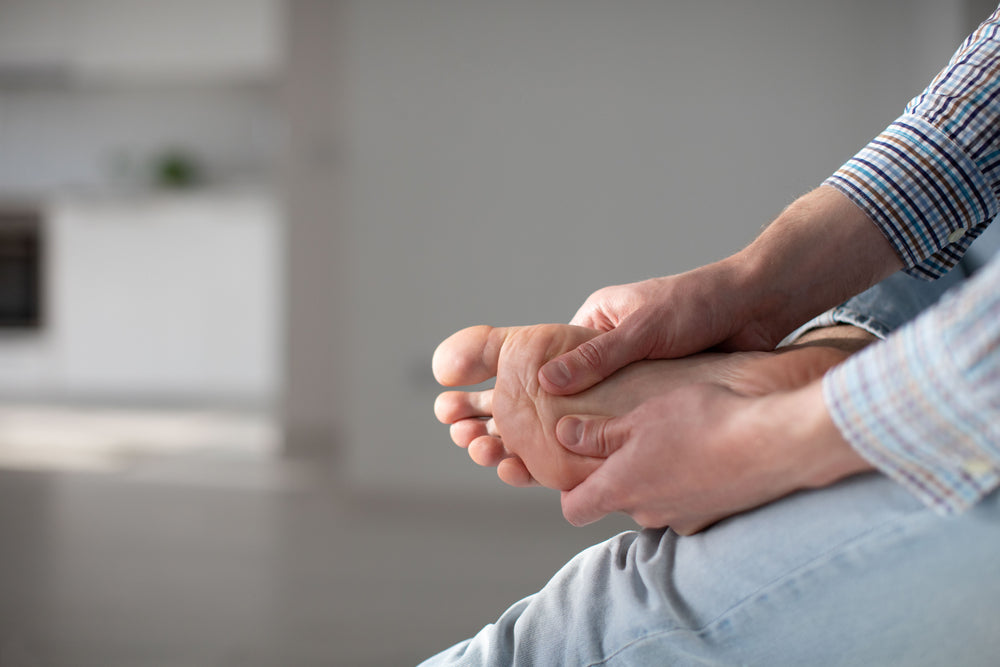
A close-up of a person's hands holding and massaging their bare foot, wearing a blue and white checkered shirt and light blue jeans.

Understanding Your Pain

Why does the ball of your foot hurt?

The metatarsal heads bear significant weight during the push-off phase of gait. When pressure is distributed evenly across all five metatarsals, the load is manageable. But when pronation shifts weight medially — or when the first ray is hypermobile and can't bear its share of the load — the central metatarsal heads (2nd, 3rd, 4th) become overloaded.

The pronation connection: Excessive pronation unlocks the midfoot and destabilises the first ray (big toe side). The first metatarsal can't bear its normal share of weight, so the load transfers to the smaller central metatarsals — which aren't designed to handle it. The result is localised inflammation, pain, and callus formation.

Footwear plays a significant role. High heels shift body weight forward onto the forefoot. Thin-soled shoes provide no cushioning. Tight toe boxes compress the metatarsal heads together. But footwear alone rarely causes metatarsalgia — it usually takes a biomechanical predisposition (pronation, first ray instability) combined with footwear stress.

The 1st Cutaway is critical for metatarsalgia

Interpod's 1st Cutaway allows the first ray to plantarflex naturally during push-off. This means the first metatarsal can bear its proper share of weight — taking pressure off the overloaded central metatarsals. Combined with the Rearfoot Wedge to control pronation, this addresses both the force (pronation) and the consequence (forefoot pressure imbalance).

Your Treatment Plan

Your path to healing — step by step

Jump in at the stage that matches where you are right now.

1

Right now — Reduce the pressure

Immediate relief

  • Wear cushioned shoes with a wide toe box - this immediately reduces pressure on the metatarsal heads and allows the toes to spread naturally.

  • Metatarsal pad - a small adhesive pad placed just behind the metatarsal heads can redistribute pressure and provide short-term relief.

  • Ice - 15 minutes after activity to reduce inflammation.

  • Avoid high heels - heels shift body weight forward onto the forefoot, dramatically increasing metatarsal pressure.

  • Avoid thin-soled shoes - no cushioning means maximum force transmission to the metatarsal heads.

2

This week — Strengthen and stretch

Improve forefoot function

  • Toe spreads and towel scrunches - strengthen the intrinsic muscles that support the metatarsal arch.

  • Calf stretches - tight calves increase forefoot loading during gait. Stretch daily, 30 seconds each side.

  • Massage ball under the forefoot - gentle rolling to release tension in the plantar tissues.

  • See a podiatrist - if pain persists, a professional can differentiate metatarsalgia from Morton's neuroma, stress fracture, or sesamoiditis, and assess your biomechanics.

3

The long-term solution — Biomechanical correction

Address the force imbalance

Metatarsal pads cushion the symptom. The Model P corrects the biomechanics that cause the pressure imbalance in the first place.
  • Rearfoot Wedge - resists pronation, stabilising the midfoot and allowing the first ray to bear its proper share of forefoot load.

  • 1st Cutaway - allows the first metatarsal to plantarflex during push-off, redistributing weight away from the overloaded central metatarsals. Critical for metatarsalgia.

  • Plantar Fascial Groove - improves windlass mechanism, helping the foot stabilise during push-off without compensatory forefoot loading.

Metatarsalgia is a pressure distribution problem.Metatarsal pads redistribute pressure passively. The Model P corrects the biomechanical forces that create the imbalance — enabling the first ray to do its job and taking the load off the smaller metatarsals.

4

Ongoing — Prevention

Stay pain-free

  • Wear the Model P daily - the biomechanical forces that cause forefoot overload are present with every step.

  • Wide toe box shoes - continue choosing footwear that doesn't compress the forefoot.

  • Maintain forefoot strength - toe exercises 2–3 times per week.

Why Interpod Works

Four design features that resist pronation and assist supination

Generic insoles only have arch support. Interpod has four biomechanical design features — the same features found in custom orthotics costing $500+.

  • Plantar Fascial Groove ★

    A groove engineered into the orthotic to accommodate the plantar fascia. Reduces the force needed to establish the windlass mechanism — the foot's natural arch-raising system. Directly reduces the strain that causes plantar fasciitis.

    Assits supination
  • Rearfoot Wedge ★

    Resists the excessive pronation forces that over-flatten the arch and overload the plantar fascia. By inverting the calcaneus, it reduces the strain transmitted to the fascia during loading.

    Resists pronation
  • 1st Cutaway

    Allows the first metatarsal to plantarflex naturally during push-off, enabling the windlass mechanism to function properly without interference from the orthotic.

    Assits supination
  • Cuboid Notch

    Assists supination during the transition from midstance to push-off, stabilising the lateral column. Typically only found in custom-made orthotics.

    Resists pronation

Common Questions

Metatarsalgia FAQs

What's the difference between metatarsalgia and Morton's neuroma?

Metatarsalgia is generalised pain under the metatarsal heads caused by pressure overload. Morton's neuroma is a specific nerve compression between the 3rd and 4th metatarsal heads, characterised by burning, numbness, or tingling into the toes and a sensation of standing on a fold of sock. Both can be helped by orthotics, but Morton's neuroma may require additional specific treatment. If you experience numbness or tingling, consult a podiatrist for diagnosis.

Are metatarsal pads or orthotics better?

Metatarsal pads provide passive pressure redistribution — useful for short-term relief. Orthotics address the underlying biomechanical cause (pronation, first ray instability) that creates the pressure imbalance. For lasting relief, orthotics that correct the force distribution are more effective than pads that simply cushion the symptom.

Can I wear orthotics in dress shoes?

The Model P's slim profile (Fit to Shoe 9/10) fits in most shoes with removable insoles. For very slim dress shoes, the Low arch provides the thinnest profile while still offering biomechanical correction. The 1st Cutaway is particularly important in dress shoes where forefoot space is limited.

What if the orthotics don't help?

You're covered by our 90-day full refund guarantee. If ball of foot pain persists, consult a podiatrist to rule out Morton's neuroma, stress fracture, or sesamoiditis. Contact us at help@interpod-orthotics.com.

Related Conditions

Interpod also treats

Start your path to lasting relief today

Australians have discovered that the right support can make everyday movement easier. Find the Interpod orthotic that suits your needs.

Try risk-free — 90-day full refund guarantee.