

ITB syndrome — get back to running without the lateral knee pain

Iliotibial band syndrome is the runner's classic outer-knee pain. We'll take you from settling the flare to the strengthening, gait, and biomechanical support that address why it keeps coming back — backed by university research and 25 years of podiatry science.

🎓 8 independent university studies

🏃 The most common cause of lateral knee pain in runners

🔬 Interpod reduces internal tibial rotation — the foot-driven force behind ITB strain

Does this sound like you?

Recognise any of these symptoms?

  • Sharp or burning pain on the outside of the knee

  • Pain that comes on at a predictable distance or time into a run

  • Worse running downhill or on cambered, sloped surfaces

  • Eases with rest, then returns once you run again

  • Tender to press just above the outer knee

  • Pain that can radiate up the outside of the thigh
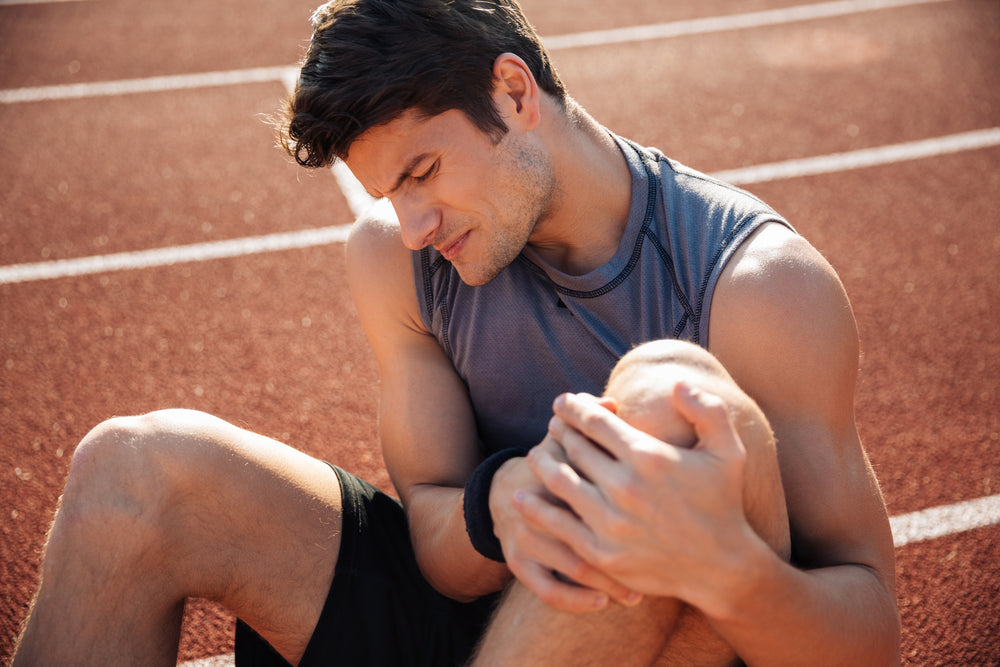
If you recognise two or more of these, it may be ITB syndrome— the most common cause of lateral knee pain in runners. The good news: it responds well to the right plan, and you're in the right place.

A man sitting on a red running track, holding his knee in pain wearing a gray sleeveless athletic shirt and black shorts.

Understanding Your Pain

What's really causing that outer-knee pain?

The iliotibial band (ITB) is a thick band of fascia running down the outside of your thigh, from the hip muscles to a point just below the outer knee. With every stride, it's loaded as the knee bends and straightens.

ITB syndrome is an overuse problem. As the knee passes through about 30 degrees of bend in early stance, the lower part of the band is compressed against a bony ridge on the outer thigh bone. Repeated thousands of times over a run, that compression irritates the tissue beneath the band — producing the sharp, burning pain on the outside of the knee.

Why it happens to runners. Most cases trace back to a combination of training load — a jump in mileage, lots of downhill or same-direction track running, cambered roads — and control. When the hip stabilising muscles fatigue or are weak, the pelvis drops and the thigh rolls inward, increasing the load carried by the band.

Where your feet come in. When the foot pronates excessively, the shin bone rotates inward with it. That internal rotation travels up the leg and adds to the strain on the ITB at the outer knee. It's one input among several — but it's the one most orthotics ignore, and the one Interpod is built to address.

The "tight band you can stretch out" myth

The ITB is one of the strongest, least stretchable bands of tissue in the body — you can't meaningfully lengthen it by stretching or foam-rolling, and rolling directly on the painful spot often makes it worse. ITB syndrome is a compression-and-load problem, driven by hip control and training. That's why lasting relief comes from strength, gait, and load management — not from stretching the band itself.

Your Treatment Plan

Your path to healing — step by step

Jump in at the stage that matches where you are right now.

1

Right now — Settle the flare

Calm the irritation

Your first priority is to take the load off the irritated tissue so it can settle. These measures won't address the cause, but they break the cycle of re-irritation so the tissue can recover.
  • Back off the aggravating runs — reduce volume, and ease up before the pain comes on rather than running through it.

  • Ice the outer knee — 15–20 minutes after activity to ease the irritation.

  • Anti-inflammatory medication — short-term NSAIDs (ibuprofen or naproxen). Ask your pharmacist for advice.

  • Avoid downhills and cambered surfaces — both spike the load on the band.

  • Don't foam-roll the painful spot — pressing directly on the sore outer knee compresses already-irritated tissue and tends to make it worse.

2

This week — Reduce the load

Take the pressure off the band

While the irritation settles, reduce the mechanical load that's driving it. Terrain and training adjustments matter more here than anything else.
  • Run flatter routes — avoid hills, especially downhill, and switch sides on cambered roads.

  • Cut mileage temporarily — and avoid long, repetitive same-direction track sessions.

  • Wear supportive, structured shoes — and replace worn-out running shoes.

  • Keep moving in pain-free ways — swimming, pool running, or easy cycling maintain fitness without aggravating the knee.

3

Weeks 2–6 — Strengthen and retrain

Address what's driving it

This is the most important step. ITB syndrome is mainly a control-and-load problem, so building hip strength and adjusting how you run is what produces lasting change.
  • Strengthen the hips — glute and hip-abductor work (side-lying leg raises, hip hitches, single-leg sit-to-stands) restores the pelvic control that takes load off the band. This is the cornerstone of recovery.

  • Retrain your gait — increasing your step rate (cadence) by around 5–10% and avoiding a narrow, foot-crossing stride both reduce load at the outer knee. A physiotherapist can guide this.

  • See a physiotherapist — if it isn't improving, a physio can assess your hip control and running mechanics and build a targeted programme.

  • Return to running gradually — rebuild volume slowly, on flat ground first, and ease off if symptoms return.

4

The long-term solution — Address the foot-driven cause

Biomechanical support with the Model P

Strength and gait work address the hip and the training load. The Model P addresses the part most programmes leave out: the foot. By resisting excessive pronation, it reduces the internal tibial rotation that adds strain to the ITB at the outer knee — so the band is loaded less with every stride.
  • Rearfoot Wedge — resists the excessive pronation that rotates the shin inward, reducing the rotational strain carried up to the ITB.

  • Plantar Fascial Groove — helps the foot establish its own arch efficiently through the windlass mechanism, so the leg works in better alignment. Proven at p<0.001.

  • 1st Ray Cutaway — lets the big toe joint function naturally through push-off, keeping the foot's mechanics smooth.

  • Cuboid Notch — assists supination into push-off, stabilising the outer foot as you toe off.

This is the input most orthotics ignore.Generic insoles add arch support; the Model P actively resists the pronation that drives internal tibial rotation — the same biomechanical support found in $400+ custom orthotics, at a fraction of the cost. It works alongside your hip and gait work, not instead of it.

5

Ongoing — Stay pain-free and build back up

Return to full mileage

Once the pain has resolved, keep the gains and rebuild carefully. The forces that drove the problem don't disappear just because the pain has — so the strength work and the foot support stay in the picture.
  • Keep up the hip strengthening — a short maintenance routine a few times a week holds onto the control you've built.

  • Build mileage progressively — increase load gradually and reintroduce hills slowly.

  • Keep the Model P in your everyday shoes — it keeps resisting the pronation that adds strain to the band.

  • For big mileage, consider the Model S (Sport) — once you're symptom-free, the Model S is built for long training blocks: lighter and more comfortable over distance. It has less arch height and a reduced rearfoot wedge, so it's not as supportive as the Model P — keep the Model P for maximum support and bring in the Model S as your miles increase.

Why Interpod Works

Four design features that resist pronation and assist supination

Generic insoles only have arch support. Interpod has four biomechanical design features — the same features found in custom orthotics costing $500+.

  • Plantar Fascial Groove ★

    A groove engineered into the orthotic to accommodate the plantar fascia, reducing the force needed to establish the windlass mechanism — the foot's natural arch-raising system. Helps the foot support itself efficiently with every step.

    Assits supination
  • Rearfoot Wedge ★

    Resists the excessive pronation that drives rotational strain up the leg. By inverting the heel, it controls the foot's motion through the most demanding phase of the stride.

    Resists pronation
  • 1st Ray Cutaway

    Allows the first metatarsal to plantarflex naturally during push-off, so the windlass mechanism works without interference from the orthotic.

    Assits supination
  • Cuboid Notch

    Assists supination during the transition from midstance to push-off, stabilising the lateral column. Typically only found in custom-made orthotics.

    Resists pronation

University Research

Proven results — not marketing claims

  • ↓30%

    A US study at Duquesne University found Interpod reduced internal tibial rotation in women during hopping and landing (from 4.5° to 3.2°, p=0.028) — the same foot-driven rotation that loads the knee.

    Duquesne University, Pittsburgh

  • = Custom

    No difference in comfort or fit vs custom-made orthoses. Zero Interpod devices needed adjusting.

    La Trobe University


  • #1 Rearfoot

    The most effective prefabricated orthotic tested at controlling rearfoot position — outperforming six competing devices.

    La Trobe University

Common Questions

ITB Syndrome FAQs

Do orthotics help ITB syndrome?

They help with one part of the picture. The mainstays of ITB syndrome recovery are hip strengthening, gait retraining, and load management. Where orthotics add value is the foot: by resisting excessive pronation, Interpod reduces the internal tibial rotation that adds strain to the band at the outer knee. Used alongside your strength and gait work — not instead of it — they address an input most programmes overlook.

Should I foam-roll my IT band?

Rolling directly on the painful outer knee usually makes ITB syndrome worse, because the problem is compression of the tissue beneath the band — and the band itself can't be meaningfully stretched or lengthened. Gentle work on the surrounding hip and thigh muscles is fine; pressing hard on the sore spot is not.

Why does it hurt at the same point in every run?

ITB syndrome is load-dependent. The irritation builds as the band is compressed thousands of times, so the pain tends to appear at a predictable distance or time once the tissue reaches its threshold. As the condition settles, that threshold extends and the pain-free distance grows.

Is it the same as runner's knee?

No, though they're often confused. Runner's knee (patellofemoral pain) is felt around or behind the kneecap; ITB syndrome is felt on the outside of the knee. They share a common foot-driven contributor — pronation and internal tibial rotation — but the rehabilitation focus is different.

Which support level do I need?

It depends on your individual foot mechanics, not the severity of your pain. The Model P+ ($125) lets you trial all three support levels at home to find the one that feels best — the same approach a podiatrist uses.

Should I keep running?

You can usually keep running at a reduced volume — staying below the distance that brings on pain and avoiding downhills. Running through significant pain tends to prolong recovery. Cross-training such as swimming, cycling, or pool running maintains fitness while the tissue settles.

What if the orthotics don't help?

You're covered by our 90-day full refund guarantee. If your pain persists after addressing the hip, gait, and foot contributions, we recommend seeing a physiotherapist or podiatrist — you can also contact us at help@interpod-orthotics.com for guidance.

Related Conditions

Interpod also treats

Start your path to lasting relief today

Australians have discovered that the right support can make everyday movement easier. Find the Interpod orthotic that suits your needs.

Try risk-free — 90-day full refund guarantee.